



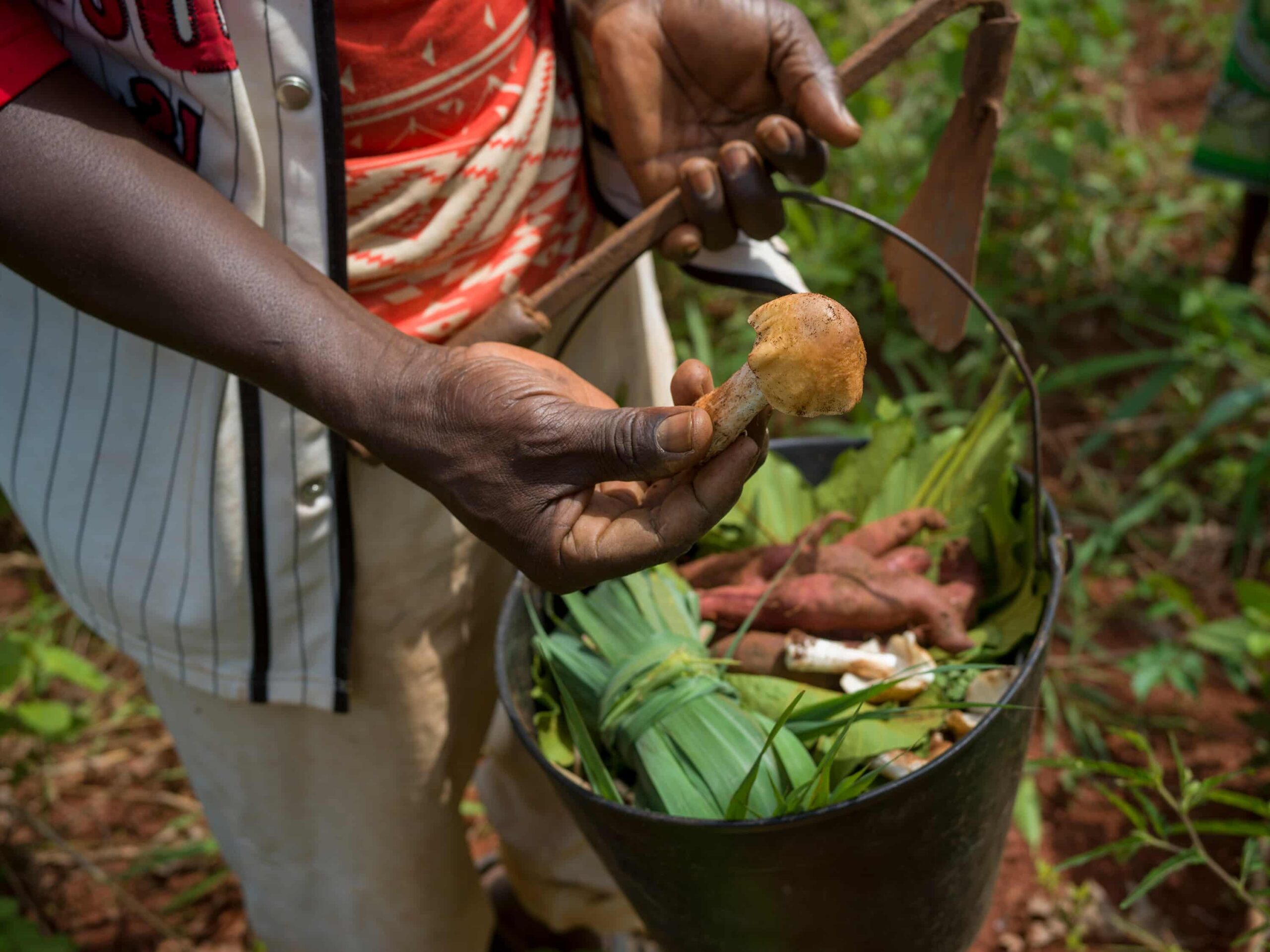
The African Development Bank (AfDB) predicts that the continent’s food insecurity should be eliminated in five years.
Botswana is reportedly imports over 900 million Pula worth of food (Statistics Botswana May 23 report),.
The bank group’s President, Akinwumi Adesina revealed to Reuters recently that,” We shouldn’t be talking about food security in Africa more than five years from now. There’s no reason for it. We have the technology and the financing to do it at scale.”
His conviction is attributable to the fact that AfDB’s $25 billion goal is “well on track”. The bank supports programs in over 30 African nations that have contributed to the production of almost $12 billion worth of food.
Prior to the Reuters interview, Adesina told a High Consultative Round Table at the 78th United Nations General Assembly that the global financial architecture constrains African development, the bank’s release states. He counted five such constraints and suggested how each could be solved.
Firstly, the international financial architecture; he reasoned, was not delivering the scale of resources needed to allow Africa to achieve its growth and development priorities. Africa faced a financing gap of $1.2 trillion through 2030 to finance its Sustainable Development Goals (SDGs).
Secondly, the international financial architecture was not providing climate financing at the scale needed for Africa to adapt to climate change.
He said; “Africa contributes only three percent of global emissions and suffers disproportionately from climate change, losing $7–15 billion annually. This figure is expected to rise to $50 billion by 2030. Yet, Africa faces a climate financing gap of $213 billion annually through 2030.”
The third constraint is, Adesina said, that the current international financial architecture made debt restructuring too complex to achieve, since debt restructuring is disorderly, protracted, and costly. He explained that this poses serious risks for African countries facing debt distress.
The Bank chief also hinted that the global financial architecture also skews international emergency financial resources in favour of richer countries that least need the resources. Noting, for example, that of the $650 billion in Special Drawing Rights (SDRs) issued by the International Monetary Fund (IMF), Africa received just $33 billion or 4.5 percent.
Another constraint the African Development Bank head underlined was that the current international financial architecture delivers uneven fiscal responses for developing countries during times of global shocks. He said while total fiscal measures taken to fight the Covid-19 pandemic amounted to $17 trillion or 19 percent of global Gross Domestic Product (GDP), Africa received just $89 billion, which represented 0.5 percent of global value.
As solutions to the constraints, Adesina suggested that multilateral development banks must deploy risk mitigating instruments—including foreign exchange risk mitigation—to leverage the almost $145 trillion in assets under management by institutional investors for climate-related projects
Second is the simplification of the global climate finance architecture, making it better coordinated, and strengthening the capacity of countries to access climate funds. He suggested that loans should contain contingency clauses that free up countries from loan repayments when they face climate shocks.
Thirdly he urged multilateral development banks to change their business models to deliver greater volumes of concessional financing for countries. He said it was necessary to fast-track the G20 Common Framework for Debt Treatments to deliver debt restructuring and debt resolution faster.
His fourth recommendation is better capitalisation of multilateral development banks. According to Adesina, this requires an increase in their capital base, especially through large increases in paid-in capital, which is needed to leverage more financing.
The bank chief’s fifth recommendation for making the global financial architecture fairer is for a portion of IMF Special Drawing Rights (SDRs) from SDR donor countries to be channelled to multilateral development banks. He explained that the African Development Bank and the Inter-American Development Bank had developed a model that would allow for SDRs to be leveraged by a multiple of three to four, while preserving their reserve asset quality.
He said a $25 billion SDR rechannelling would create $100 billion in additional financing for Africa. The AfDB head said SDR rechannelling would be at no cost to taxpayers in donor countries and there were zero risks of loss. He explained that SDR-rechannelling through multilateral development banks was the best model available to leverage and deliver the trillions of dollars needed for development to be accelerated. He said the issuance of $500 billion in new SDRs to tackle climate change—if re-channelled through multilateral development banks—would deliver $2 trillion in global development financing, complementing the IMF’s efforts.